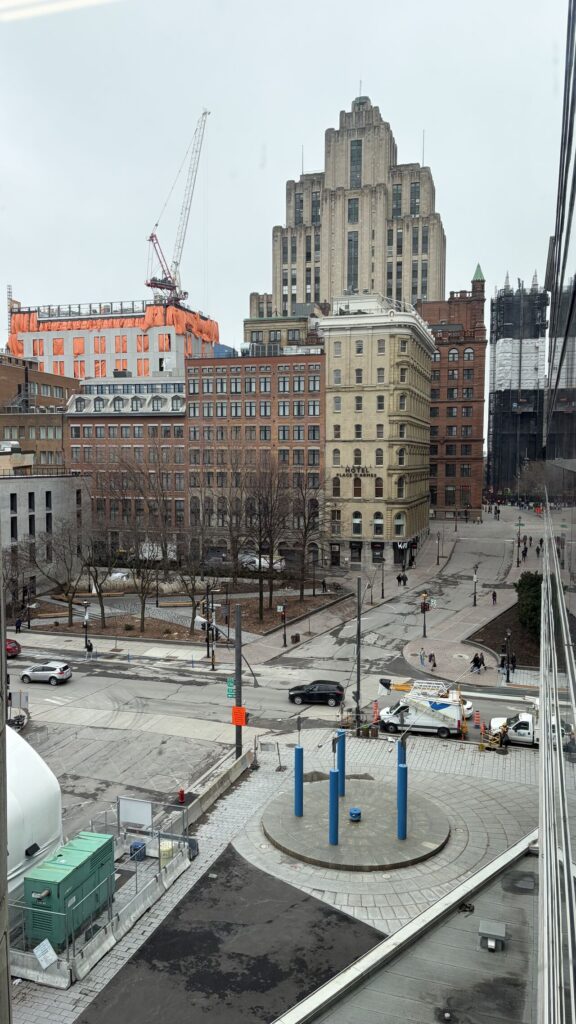
While attending the Montreal Real Estate Forum at the Palais des congrès, I took a moment to admire one of the most inspiring urban views in the city. Looking across Old Montreal, I was reminded that some of the spaces visible from that window were projects I helped shape between the ages of 18 and 25.
Seeing these places decades later is both humbling and emotional. Each project represents a chapter of my early professional journey and my desire to contribute to the beauty, functionality, and pedestrian experience of Montreal.
LaPresse Park: Transforming a vacant lot into public space
One of the first projects visible from the Palais des congrès is LaPresse Park. At the time, the site was an empty lot owned by the LaPresse newspaper. Working with architect Claude Beaubien, I was responsible for the original design concept of the park.
The objective was simple yet important: transform an underused urban void into a welcoming public space that could contribute positively to the surrounding neighborhood. Even today, it remains rewarding to know that this intervention became part of Montreal’s urban fabric.
Côte-de-la-Place-d’Armes: Prioritizing pedestrians in Old Montreal
Another important project was the redesign and realignment of Côte-de-la-Place-d’Armes with Saint-Urbain Street. At the time, there was a proposal to build a bridge connection between the Palais des congrès and Place-d’Armes.
My vision took a different direction. Instead of prioritizing infrastructure that would dominate the streetscape, the project focused on creating a stronger pedestrian experience and preserving the urban character of Old Montreal.
Working with SIMPA (Montreal Real Estate Corporation for Architectural Heritage), the design emphasized walkability, visual continuity, and a more vibrant relationship between architecture and public life.

The Aldred Building stained glass entrance hall
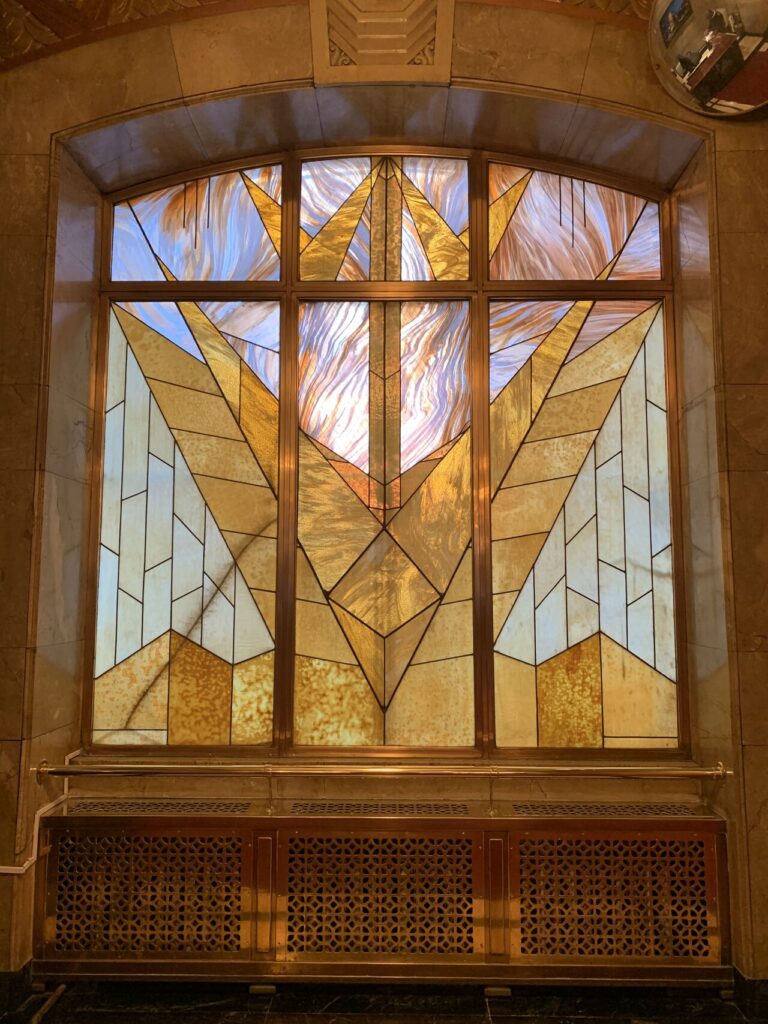
The third project visible from this perspective is the stained glass design for the entrance hall of the iconic Aldred Building. Working with Elwood and Henderson architects, I created the original stained glass concept that became part of the building’s elegant interior identity.
Although the execution artist remains unknown, the design itself was intended to complement the architectural prestige of one of Montreal’s most recognizable heritage buildings.

Architecture as a contribution to city identity
Looking at these projects today reminds me that architecture is not only about buildings. It is about shaping experiences, preserving urban identity, and improving how people interact with the city around them.
Old Montreal continues to inspire me because it demonstrates how thoughtful urban planning, pedestrian-friendly design, and architectural heritage can coexist beautifully within a modern city.
“The greatest privilege for an architect is to return decades later and see that a project still contributes positively to the life and beauty of a city.”
Miguel Escobar – THE LUXURY OF EXPERIENCE – Interdisciplinary & International Real Estate and Economic Development Strategist
Conclusion: A lifelong connection with Montreal
These three projects represent some of the earliest contributions Miguel Escobar made to Montreal’s architectural and urban landscape. Decades later, they continue to reflect his passion for public space, pedestrian experience, and timeless urban design.